Neighbourhood Referral Marketplace — Two Shipped Apps
Three full versions and an MVP re-cut; both apps are on Google Play.
A two-sided neighbourhood professional-referral marketplace, designed end to end across three full versions — roughly 193 screens, four wired flows and about 21 designed error and success states — then re-cut into a reduced MVP: the same product with fewer screens, the slice the client wanted shipped first, delivered as its own file. Both apps reached Google Play with over a thousand installs each. That is proof it shipped, not proof it succeeded; the review counts are in single figures.
- Role
- Sole designer of the app, across three versions and an MVP re-cut
- Timeframe
- Nov 2024 – Jan 2025
- Stack
- Figma
- Evidence
- Shipped
- Design file

Two-sided neighbourhood professional-referral mobile marketplace, designed end to end across three full versions (roughly 193 screens, 4 wired prototype flows, and 21 error/success states) plus a dedicated MVP handoff file. Successfully launched on Google Play in two production builds: the Morador resident app (com.mycompany.indicaz) and Profissional service provider app (com.mycompany.indicazprofissionais), both exceeding 1,000 installs with the designed layout and onboarding copy shipped verbatim.
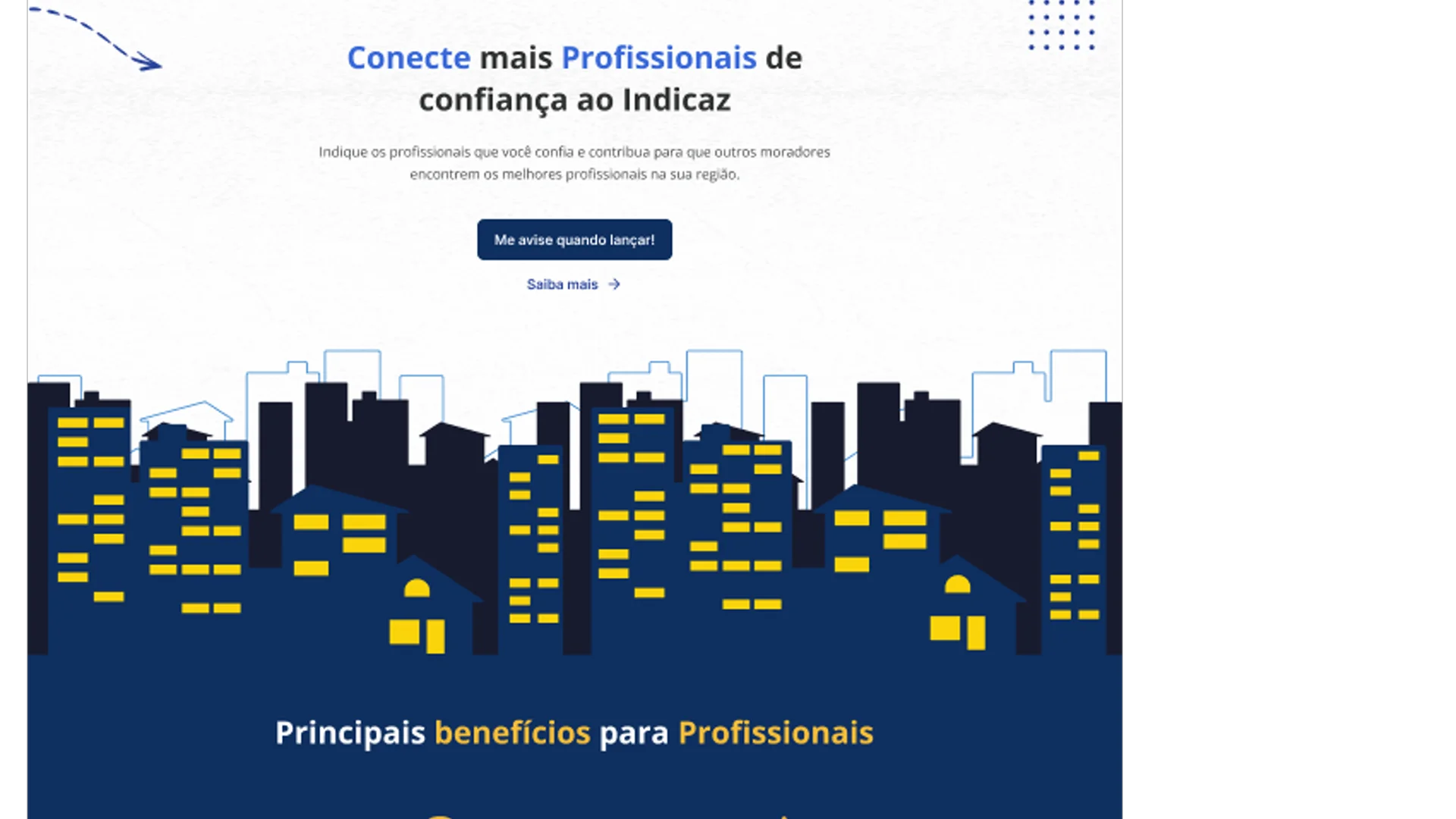
Agency employment at Sagitta, delivering as staff under an intense 8-project workload. Clear team boundaries: I designed the mobile applications across all versions; my colleague João Chagas designed the marketing website (Site). The client, Mauro, was himself a product designer at another company who acted as his own product lead: he dictated all functional features, rejected designer input, and changed visual styling frequently. Documented between November 2024 and January 2025.
A neighbourhood trust network on Google Play
- 2
- production apps shipped on Google Play
- 1,000+
- installs on each app (Morador & Profissional)
- 193
- screens designed across v1 and v2
- 4
- wired interactive prototype flows
Condominium and neighborhood recommendations rely on hyper-local credibility. A generic online review has minimal weight compared to a trusted neighbor's recommendation. indicAZ was conceived to capture this dynamic through a three-tier reputation model distinguishing general ratings (Avaliação Geral), building-level evaluations (Avaliações do Condomínio), and regional scores (Avaliações da Região).
App v1: foundations, 12 flows, and wired prototyping
The initial delivery (App v1) encompassed 96 canvas nodes, containing 68 numbered screen frames across 12 complete user flows:
- Comprehensive Flow Coverage — Auth, password recovery, progressive resident onboarding (buscar moradia, dados adicionais), contact listings, profile creation, and contact evaluations.
- Designed Failure and Confirmation States — 21 explicit outcome screens (cadastroSuccess, cadastroError, cadastroAvaliaçãoSuccess, atualizaçãoAvaliaçãoSuccess), ensuring users never encountered dead ends.
- Wired Interactive Prototypes — Fully animated Figma prototypes originating at Loading/0 (452:4562) and 1.1 Loading (1033:44134), utilizing slide-in drawer overlays (300ms ease-out) for filters and side navigation.
- Foundation Tokens — An 11-step blue palette ramp (Azul/50…950) paired with component sets for ratings, contact cards, and recommendation badges (selo-nós-indicamos).
App v2: monetization tiers, quote requests, and trust badges
When the client rejected v1 and requested a major scope expansion, I designed App v2 (~125 screens across 18 flows), introducing commercial marketplace mechanics:
- Three-Tier Professional Subscription Interface — Tiered profile presentations for Free, Pro, and Elite providers (perfilProfissional/Free /Pro /Elite), differentiating contact visibility and profile prominence according to subscription level.
- Orçamentos (Quote Request) Flow — End-to-end quote-bidding mechanic (primeiroAcesso → criarOrçamento → visualizarOrçamentos) enabling residents to request service estimates without exposing personal phone numbers until approved.
- Four-Badge Trust Architecture — Expanded credential badges (selo-nós-indicamos, selo-pontualidade, selo-atendimento, selo-qualidade) and an onboarding education screen (12.6 Selo/ComoFunciona).
- Domain Component Library — Custom project components including AppBarV2, tabmenu, tabcontent, and rating modules built over an Untitled UI base.
The MVP re-cut and first developer handoff
Mid-flight, the client demanded the expansive system be re-scoped for an immediate initial build. I produced Indicaz - v1: an edited cut containing only the core screens selected by the client for the initial development handoff. This ensured developers received a focused, actionable package rather than navigating the expansive experimental canvases.
The stakeholder cycle: rejection, cancellation, and production reality
The engagement with Mauro was the most demanding stakeholder dynamic in my agency career. As a practicing product designer at another company, Mauro acted as de facto product lead, insisting on total control over screen specifications, rejecting team recommendations, and changing color palettes weekly. After rejecting both complete app designs, he cancelled the contract two screens into App v3 and demanded a full refund.
Months later, we discovered that Mauro had taken our deliverables and shipped them directly to production. The live Google Play apps featured my App v2 screens and my Figma onboarding copy verbatim, while the landing page used João Chagas's copy word-for-word. While the client could not align internally during the project, the design itself proved robust enough to launch directly into production.
The true measure of a design's viability isn't client consensus in a review meeting; it is what gets deployed to production. In indicAZ, the rejected flows and onboarding copy shipped straight to Google Play.
Evidence
A documented rejection and cancellation cycle that culminated in a shipped production success: Mauro rejected App v1 (68 screens across 12 flows), demanded and rejected App v2 (~125 screens across 18 flows), and cancelled the contract two screens into App v3 demanding a refund. Subsequently, Mauro shipped my App v2 mobile interface and onboarding copy verbatim to Google Play, along with João's landing page copy. Both apps remain live with over 1,000 installs each.